
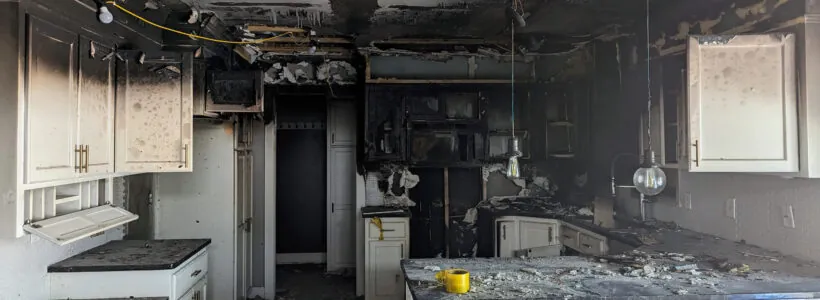
Fire Damage Restoration Services in Minnesota
The hardest part of a fire loss is usually not the fire. It is the wait.
Nothing gets rebuilt until your insurer approves the scope of work. That approval depends almost entirely on how well the damage was documented in the first week. Kiser Construction has been rebuilding after fires in Minnesota since 2003, and this is where we put our effort.
Our crews work out of Elk River and cover the north and northwest metro. That includes Anoka, Blaine, Brooklyn Park, Champlin, Coon Rapids, and Maple Grove.
How we document a fire loss
We capture every damaged area with a DocuSketch camera. It takes 360 degree images of the room from top to bottom and generates measurements and a floor plan from them.
That means the scope we send your adjuster is built on measured dimensions, not estimates from a tape and a notepad. Fewer questions come back. Fewer site revisits get scheduled. The claim moves.
It also gives you a permanent record of the space before demolition, which matters when you are picking finishes eight months later and cannot remember how the room was laid out.
The first 24 hours
- Emergency board up and tarping to secure the building
- Confirm utilities are shut off
- Extract firefighting water and set drying equipment
- Capture 360 documentation before anything moves
- Separate what can be cleaned from what has to go
Securing the building is not a formality. An open wall through one night of Minnesota rain turns a fire claim into a fire and water claim.
The water nobody mentions
Crews put thousands of gallons into a structure to knock down a house fire. That water runs inside wall cavities and under flooring and sits there. Left a week in July, you have mold on top of the fire damage.
The water counts as fire damage, too. Minnesota’s State Fire Marshal includes water damage when it adds up fire loss in its Fire in Minnesota report.
We take moisture readings through the whole structure, not just the burned rooms, and log them daily until they come back to standard. Mold remediation is handled in house if it comes to that.
Fire damage restoration for the fires we see most
Cooking is the leading known cause of residential fires in Minnesota. The same State Fire Marshal report counted 1,936 residential fires started by cooking in 2024. Our kitchen fire damage restoration page covers how those jobs go, from smoke cleanup to the rebuild.

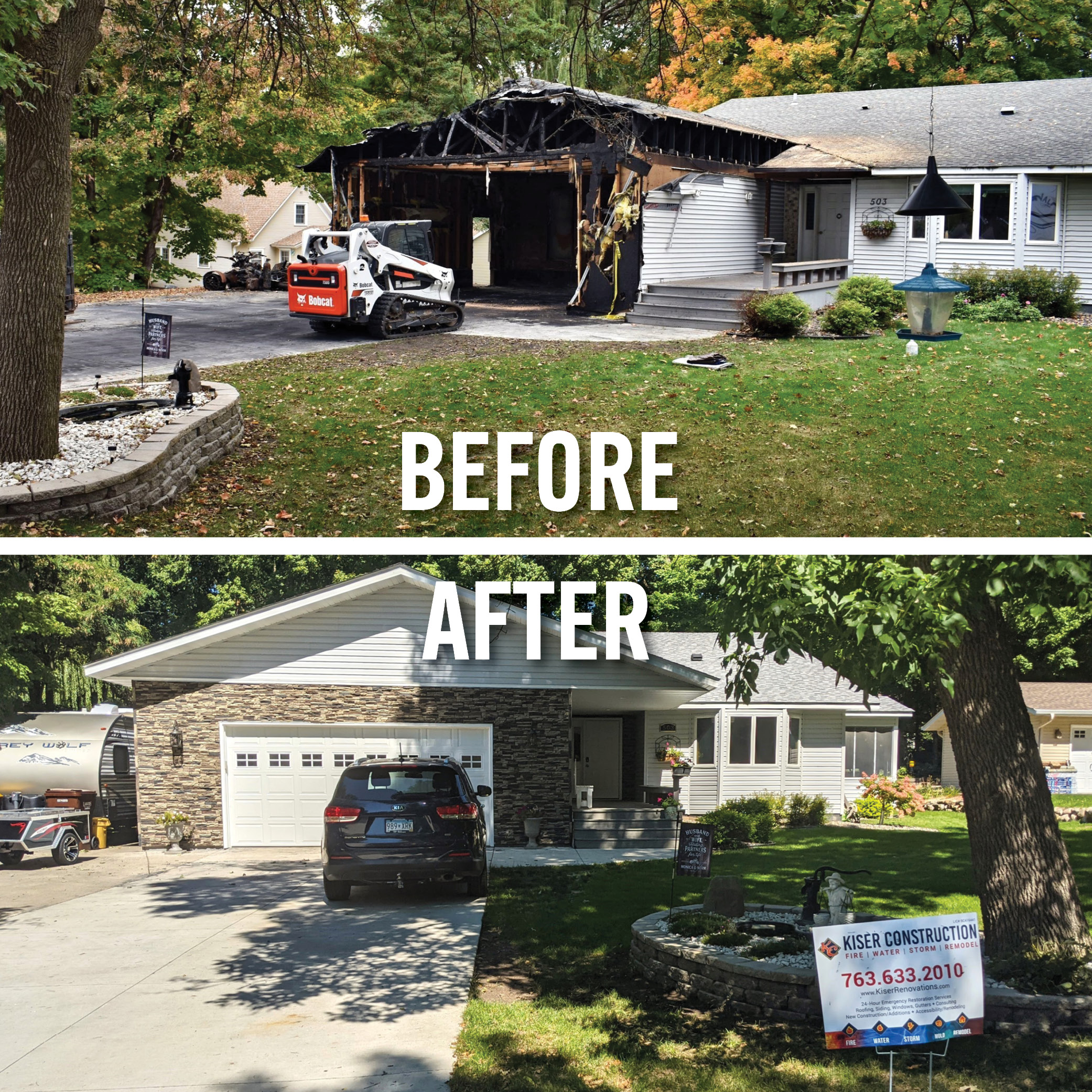
Garage fires bring their own problems. Vehicles, chemicals, and stored items sit close together in a small space. Garage fire damage restoration covers cleanup, repair, and the rebuild.
Smoke reaches far past the burned room. When the smell keeps coming back after cleanup, that is its own job. Smoke odor removal treats the source of the odor instead of covering it up.
One contractor, start to finish
Fire jobs often get split four ways. Mitigation, smoke, contents, and then a general contractor for the rebuild. Every handoff is a place for something to fall through, and the homeowner ends up project managing all of it during the worst month of their year.
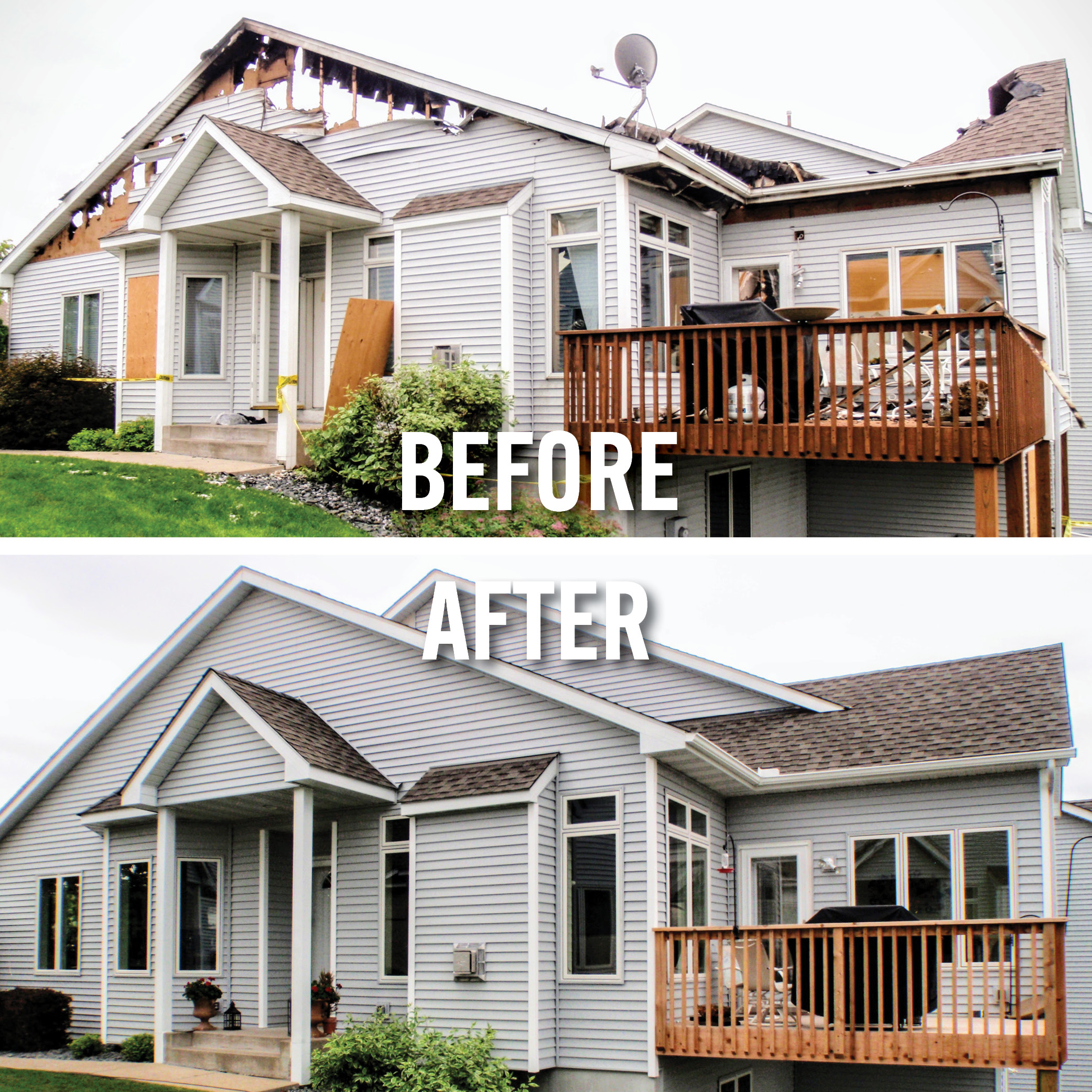
We run the whole sequence. Board up, water, smoke damage cleanup, contents cleaning, and the rebuild. One scope, one schedule, one number.
Common questions
Will my house have to come down?
Sometimes, in severe cases. More often the damaged areas get taken back to the studs so the structure can be made sound again. The inspection tells you which one you are looking at.
How long does a rebuild take?
There is no single answer, and anyone who gives you one on the first visit is guessing. Small losses can run a few months. Large ones can run past a year. The biggest variable is not construction. It is how fast your insurer inspects, reviews the scope, and approves.
Can I clean up a small fire myself?
We would not. Soot is acidic and the wrong cleaner sets it into the surface instead of lifting it. Small fires also hide damage inside walls and ductwork that is easy to miss.
Will I need to move out?
Usually yes, at least for part of it, and mostly for safety reasons. If you are in the first day of this, what to do after a fire covers the immediate steps.
When should I call my insurance company after a fire?
As soon as everyone is safe. Your policy sets the rules for reporting a loss, so your agent is the right person to ask about deadlines. Once we are on site, we start documenting right away. Your adjuster gets measured scopes and photos from day one.
Can my belongings be saved after a fire?
Often, yes. Furniture, clothing, documents, and keepsakes can be cleaned instead of thrown out in many cases. We sort what can be saved from what has to go, and we document both for your claim.
Is the inspection free?
Yes. Free, with a written scope either way.
Insurance
We stay in contact with your insurer through the approval process so the claim does not sit in someone’s queue. We give them measured scopes, 360 captures, and daily logs.
What we do not do is interpret your policy or adjust your claim. Minnesota law reserves that for licensed public adjusters. Coverage questions belong with your adjuster and your agent, and any contractor who offers to handle your claim for you is telling you something worth hearing. Our insurance claim assistance page sets out where the line sits.
Call us
Fire emergencies, any hour, including holidays: (612) 518-8852. Office: (763) 633-2010.