
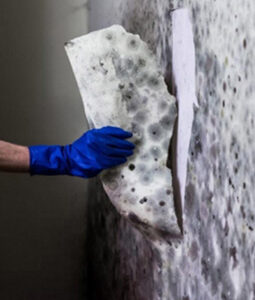
Mold Remediation in Minnesota
Most mold calls start the same way. A musty smell in the basement. A dark patch behind a dresser. A spot on the bathroom ceiling that keeps coming back after you paint over it. Water behind plaster walls can lead to mold too. Read about water damage in older Minneapolis homes.
Mold remediation is the work of removing mold growth and fixing the moisture that fed it. Kiser Construction does this work in house, from the first inspection to the last sheet of drywall going back up. We’ve been in business in Elk River since 2003, and we’re licensed in Minnesota under BC416441.
Is this the right page?
- Water is still coming in, or the leak just happened. Start with water damage restoration.
- Your basement took on water and you need it out. That’s flooded basement cleanup.
- You aren’t sure anything is wrong yet. Book a free water damage inspection.
Mold Is a Moisture Problem First
Mold needs three things to grow: moderate temperatures, food, and moisture. Your house supplies the first two all year. Drywall paper, wood, and carpet all count as food. Moisture is the one you can control.
That’s why every job starts with finding the water. If a remediation skips that step, the mold comes back. It doesn’t matter how good the cleanup looked.
The Minnesota Department of Health advises drying wet materials within 24 to 48 hours to avoid mold growth. When mold shows up, it usually means something stayed wet longer than that.
Where We Find Mold in Minnesota Homes
Our climate puts mold in predictable places.
- Attics and top-floor ceilings, after ice dams push meltwater under the shingles. Our ice dam removal page covers that problem at the roof.
- Basements, after seepage, a sump pump failure, or a slow leak nobody saw.
- Exterior walls and window frames, where condensation forms on cold surfaces in winter.
- Bathrooms and kitchens without an exhaust fan vented outside.
- Behind furniture, under carpet pad, and inside sink cabinets.
Indoor humidity matters too. MDH recommends keeping relative humidity between 20 and 40 percent in winter and below 60 percent the rest of the year. A house that runs above that range all winter feeds mold on its coldest surfaces.
Do You Need a Mold Test?
Usually, no. That surprises a lot of people. MDH does not recommend mold testing in most situations. There is no health-based standard for how much mold in the air is safe. And any mold growing indoors is a problem, whatever its color or type.
If you can see it or smell it, you already know enough to act. The money is better spent fixing the moisture and removing the growth.
Testing does have a place. It can help confirm hidden growth when the signs don’t add up. It can also show that cleanup met its goal. Kiser Construction does mold testing when the result will change what happens next.
You should know one more thing. MDH suggests asking any mold tester whether they also do remediation. We do both, and we’d rather you hear that from us up front. If you want a separate company to handle clearance testing, you’re free to hire one.
How Our Mold Remediation Works
- Find and stop the moisture. A roof leak, a plumbing drip, condensation, or groundwater. If a plumber or roofer needs to fix the source, we tell you before anything else happens.
- Set up containment. Plastic sheeting separates the work area, and vents in that area get covered so spores don’t travel through the house.
- Clean the air. Air scrubbers run in the work area while materials come out.
- Remove what can’t be cleaned. Moldy carpet, drywall, insulation, and paper products get bagged and taken out.
- Clean what can be saved. Solid wood, concrete, metal, and other hard surfaces get scrubbed and dried if they’re structurally sound.
- Dry and verify. Moisture readings confirm the area is dry before anything gets closed up.
- Rebuild. We put back the drywall, insulation, flooring, and trim. You don’t need a second contractor.
You get a written scope before work starts. It lists every room, every material coming out, and the equipment going in.
What Not to Pay For
Mold scares people, and some companies sell to that fear. Here’s what to watch for.
- Ozone treatments. MDH says ozone is not effective at killing mold and does not recommend ozone generators for mold or any other indoor air problem. Ozone also irritates the lungs.
- A scope that never mentions the water. If nobody explains where the moisture came from, the mold is likely to return.
- Prices that change once the walls are open. Ask how changes get approved before work starts.
- Pressure to sign on the spot. A real mold problem will still be there tomorrow. Get the scope in writing and read it.
Mold After a Water Loss
Many of our mold jobs start as water jobs that never got fully dried. A dishwasher leak soaks the subfloor. A finished basement takes on an inch of water and gets a box fan and a shop vac. A few months later, the smell shows up. For leaks in Minneapolis rental units, see who does what between tenants and landlords.
If you had water in the house and you’re not sure it was dried properly, a free inspection can answer that. Moisture meters read what’s inside the material, not just the surface.
Ask Who Puts the Room Back
With some mold companies, remediation and rebuild are separate jobs. The mold comes out, and you hire someone else to put the walls back. When you compare quotes, ask which one each quote covers.
We’re a licensed general contractor, so the same company that removes the mold also rebuilds the room. One written scope, one schedule, and one phone number from containment to paint.
What You Can Expect From Us
- A free inspection and a written scope you keep, whether or not you hire us.
- Payment terms in writing: 50 percent down before work begins, the rest on completion.
- A one-year warranty on our work from the date of completion.
- A customer portal that shows your job schedule in real time.
Common Questions
Often, yes. MDH says mold cleanup can be a do-it-yourself project if you wear gloves, goggles, and an N95 respirator. MDH suggests hiring a professional if you can’t wear a respirator or are sensitive to mold. We’d also recommend professional help for large areas, mold inside walls, and homes where someone has asthma.
MDH treats all indoor mold as a potential health hazard. Color doesn’t decide the response. Any mold growing indoors should be removed and the moisture problem fixed.
Yes, when a test will change the plan. In most homes, visible growth or a musty smell is enough to act on. If you’d prefer an independent company for clearance testing, you’re free to hire one.
It depends on how much material has to come out and whether the moisture source needs repair first. You get a timeline with your written scope, and our customer portal shows your job schedule in real time.
It depends on your policy and what caused the moisture. We document the damage with photos, moisture readings, and measured scans, and we work with your adjuster. Your insurance company decides coverage.
Yes. Our emergency line, (612) 518-8852, is answered 24/7 by a real person. If water is still coming in, call any hour.
We work from our Elk River office across the Twin Cities metro and the northern suburbs, within a one to two hour drive.
Call Us
Kiser Construction has been in business in Elk River since 2003. IICRC certified and licensed in Minnesota under BC416441. Every job carries a one-year warranty from completion.
Emergency line, any hour: (612) 518-8852. Office: (763) 633-2010.