Fire Damage Restoration in Champlin, MN
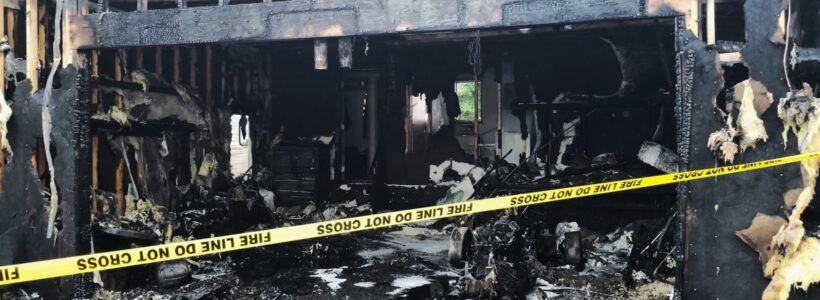
Champlin grew up in the era of the attached garage. The city went from under 2,300 residents in 1970 to more than 20,000 by 2000, and the housing built through those decades put the garage right against the house, often sharing a wall with a bedroom or a family room and sometimes sharing a ceiling with the space above.
That layout is convenient eleven months of the year and it is a genuine risk the other one. Most fire damage restoration in Champlin that we get called to started in a garage.
That is not a knock on the houses. It is just where the fuel is.
The wall between your garage and your house
There is one building component standing between a garage fire and your family, and almost nobody knows it exists. It is the separation between the garage and the living space.
The U.S. Fire Administration recommends specific measures for attached garages: half-inch gypsum board or the equivalent on the wall that attaches the garage to the house, a cover on the attic hatch if the garage opens into the attic, and a heat alarm rather than a smoke alarm inside the garage. It also notes plainly that garage fires spread further and cause more injuries and more loss than fires that start elsewhere in a home.
The reason is simple. That wall is what buys you the minutes to get out. When it is intact, a garage fire stays a garage fire for a while. When it is not, you have a house fire almost immediately.
And it gets compromised constantly, always for ordinary reasons. Somebody cut a pet door into the garage entry door. Somebody hung heavy shelving and drove lag bolts through the gypsum. The attic hatch above the garage has been open since a Christmas decoration went up there in 2011. A remodel opened a pass-through. Every one of those was done by someone who did not know the wall had a job.
It is worth walking out to your garage this week and looking. Is the wall to the house finished in solid drywall with no holes? Does the entry door close and latch by itself? Is the attic hatch covered? Five minutes.
Why garages catch
Because that is where everything flammable lives. Gasoline for the mower, propane for the grill, paint, thinner, stain, brake cleaner, oily rags. A vehicle that may drip fuel or oil onto the floor. A chest freezer and a beer fridge running old compressors. Often the furnace or water heater. Frequently a workshop with power tools and extension cords.
None of that is unusual and none of it makes anyone careless. It is simply the highest concentration of fuel and ignition sources in the average home, sitting behind one wall.
The first night
When the fire department leaves, the house is open. Broken windows, possibly ventilation holes in the roof, doors that no longer secure. Call 612-518-8852 and we will board up and tarp, usually the same night.
It keeps weather and people out, and it satisfies the expectation in most policies that you take reasonable steps to prevent further damage after a loss.
Then the assessment, documented with photographs and a written scope before anything moves. Garage fires in particular need a careful look at what is above and behind the garage, since that is where the fire was heading.
Your belongings, not just your building
Smoke gets into everything, and a lot of what it gets into can be saved. Clothing, upholstery, dishes, artwork, documents, electronics. Each needs different handling, and some of it is time-sensitive, because soot is acidic and keeps working on surfaces the longer it sits.
We treat contents cleaning as its own job with its own process. It is usually cheaper than replacement, and it matters more, because the things you want back are rarely the things with the highest dollar value.
Smoke and odor removal
Smoke follows air. It moves into wall cavities, up into the attic, through return ducts, and settles in rooms the fire never reached. The particles embed in porous materials and stay there.
Cleaning what you can see buys about three weeks. Then the first humid stretch arrives and the smell comes back, because the source was never removed. Doing it right means finding where the smoke actually travelled, cleaning or removing those materials, treating the ductwork, and sealing what needs it.
Fire damage restoration in Champlin, first night to last coat
Most companies in this business do one half of the job. Either they are a mitigation outfit that cleans up and leaves, or they are a builder who shows up weeks later once you have found them yourself. The seam between those two is where homeowners lose the most time.
We are both, and it is the main reason fire damage restoration in Champlin goes faster with us. The crew that boards up your house belongs to the same company that frames the garage back, hangs the drywall, matches the trim and paints it. One project manager from the first phone call to the walkthrough at the end. When something goes sideways there is nobody to point at, which is a useful kind of accountability.
Kiser has been doing this since 2003 and 2026 is our twenty-third year. IICRC certified, licensed and bonded, Minnesota license #BC416441. Everything we build carries a one-year warranty from the date we finish.
Call us
Emergency line 612-518-8852, any hour, answered by a person. Office 763-633-2010, 9 to 5. Assessments are free, and fire damage restoration in Champlin is a short run down Highway 169 for our crews.
Frequently Asked Questions
A fire started in my garage. How far into the house can it spread?
Further and faster than most people expect. Garage fires tend to spread more and cause more loss than fires starting elsewhere in a home, because garages hold fuel, paint, solvents, vehicles and gas appliances. In an attached garage the only thing between that and your living space is the separation wall and the door.
What is a firewall and why does it matter?
It is the rated separation between an attached garage and the living space. The U.S. Fire Administration recommends the shared wall be finished with half-inch gypsum board or the equivalent, an attic hatch cover if the garage opens into the attic, and a heat alarm rather than a smoke alarm in the garage itself. It is the single component that decides how much time you get.
What compromises that separation?
Ordinary things. A pet door or dog door cut into the garage entry door. A door propped or left open. Shelving screwed through the gypsum. An open attic hatch. A remodel that put a pass-through in the shared wall. Most of it was done for convenience by someone who did not know the wall had a job.
Can my belongings be cleaned after smoke damage, or do they have to be replaced?
A great deal can be cleaned. Upholstery, clothing, dishes, documents and electronics all have their own methods. We offer contents cleaning as a distinct service rather than treating everything as debris, and it is usually both cheaper than replacement and better for the things you actually care about.
How do you get smoke odor out for good?
By removing the source rather than masking it. Smoke settles inside wall cavities, insulation and ductwork. Cleaning surfaces alone gets you a few weeks of relief. Doing it properly means finding where the smoke went, cleaning or removing those materials, treating the ducts and sealing where needed.
Who boards up my home after the fire department leaves?
We do, usually the same night. Call 612-518-8852. Until the openings are secured your house is exposed to weather and to anyone walking past, and most policies expect you to prevent further loss.
Do you handle the rebuild too?
Yes. Board-up, demolition, drying, odor removal, then framing, drywall, trim, paint and flooring, with one project manager the whole way through.
Will my insurance cover contents cleaning?
Usually, under the personal property portion of your policy, though limits and terms vary. We inventory and document contents as part of the claim so the coverage can be applied properly.
What Can We Help You with Today?
Click below to see how we can help you with fire damage, water damage, or storm damage.