
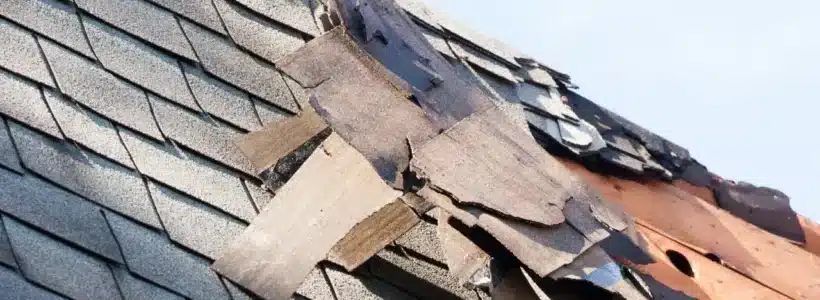
Wind Damage Restoration in Minnesota
The storm lasted ten minutes. Now a strip of shingles is gone from the back of the roof, a piece of siding is in the neighbor’s yard and there’s a wet spot on the bedroom ceiling.
That’s wind damage, and it isn’t the same as hail damage. Hail dents and bruises. Wind lifts, creases and tears, and then it opens a path for rain. Kiser Construction handles wind damage restoration from the first tarp to the last row of shingles. We’re a licensed Minnesota contractor (BC416441) based in Elk River, and we’ve been repairing storm-damaged homes since 2003.
What wind does to a house
Wind is the most common kind of storm damage. NOAA’s National Severe Storms Laboratory says damaging winds are often called straight-line winds to tell them apart from tornado damage. It classifies damaging winds as those above 50 to 60 mph, and says damage from severe thunderstorm winds is more common across the lower 48 states than damage from tornadoes.
Straight-line wind pushes in one direction. That matters for the repair. The side of the house that faced the storm usually takes the worst of it. Damage tends to start at an edge: the eave, a corner, the ridge or a loose piece of trim.
Roofs: lifted, creased and missing shingles
Wind gets under the edge of a shingle and lifts it. Sometimes the shingle tears off. Sometimes it flips up, creases and lies back down. A creased shingle can look fine from the yard and still let water in, because the seal under it has broken.
Siding, soffit and trim
Siding panels unhook and blow away. Soffit and fascia pieces work loose. Once a panel is gone, rain can get behind the wall.
Windows, doors and gutters
Flying debris breaks glass. Gutters pull away from the fascia, and a downspout that’s off the house dumps water at the foundation.
Inside the house
Wind damage turns into water damage when rain gets through the opening. Wet attic insulation, a stained ceiling or a damp wall next to a window are all part of the same storm.
Signs of wind damage you can check from the ground
Don’t climb on the roof. Here’s what you can safely look for:
- Shingles, shingle tabs or ridge caps in the yard or in the gutters.
- Dark patches on the roof where shingles used to be.
- Siding panels that are missing, loose or hanging at the corners.
- Gutters bent away from the fascia.
- Cracked glass, or a door that doesn’t close the way it did.
- Water stains on ceilings or high on walls, mostly on the side that faced the storm.
Take photos before anything gets moved or covered. Your adjuster will want to see the damage the way the wind left it.
How our wind damage restoration works
1. Stop the water first
If the roof is open or a window is broken, we cover it that day. Our emergency board-up and tarping crew closes the opening so tonight’s rain stays outside.
2. Photograph and inspect everything
We photograph the roof, siding, gutters, windows and attic before we cover anything. Then we write it all up in a scope you can read. The inspection is free.
3. Meet your adjuster
We meet your adjuster on site and share our photos and scope. We don’t interpret your policy or adjust your claim. Minnesota law reserves that for licensed public adjusters. Our insurance claim assistance page explains what we do and don’t do.
4. Repair it, inside and out
Roof, siding, gutters, windows, framing, insulation, drywall and paint are handled by one company on one schedule. You can follow that schedule in our customer portal.
Fallen trees and wind damage repair
Wind often brings a tree or a big limb down on the house. Some restoration companies advertise tree removal. We don’t remove trees, and we’d rather tell you that up front. A tree service handles that part. Once the tree is off, we secure the opening and repair the roof, framing and anything inside that got wet.
If a tree is on the house or a power line is down, keep everyone out of that part of the house. Call 911 or your utility first.
The wind damage you can’t see
Creased shingles are the classic hidden damage. They lie flat, so they look normal from the street. But the wind broke the seal that holds them down, and the next storm can lift them right off. Ask any roofer, us included, to show you close-up photos of creased shingles, not just a count of missing ones.
Water is the other hidden problem. A small roof opening can soak attic insulation for days before a ceiling stain shows up. When water gets inside, our water damage restoration crew dries it out, so nothing gets missed between the roof and the drywall.
Why homeowners call Kiser after wind damage
One company for the whole job
We’re a licensed general contractor. The tarp, the roofing, the siding, the gutters, the windows and the interior repairs all come from one company. You don’t have to line up four crews.
A real person answers 24/7
Our emergency line at (612) 518-8852 is answered by real people, day, night, weekends and holidays.
Local, and still here next year
After a big storm, out-of-town crews knock on doors. Some do good work. The trouble starts a year later, when a leak shows up and the company is gone. We’re on Meadowvale Road in Elk River, and we’ll be here next year. Our work carries a one-year warranty from the completion date.
What wind damage repair costs
Cost depends on what the wind hit. A few shingles and a gutter section is a small job. A full roof, siding on two sides of the house and interior drying is a big one.
The main factors are how much of the roof lost shingles, how many sides of the house took damage, whether water got inside and whether a tree or framing was involved. Inspections are free, you get a written scope before work starts, and we work on 50/50 payment terms.
Where we do wind damage restoration
We’re based in Elk River and handle wind damage across Sherburne, Anoka, Hennepin and Wright counties. That includes Elk River, Otsego, Anoka, Coon Rapids, Blaine, Maple Grove, Brooklyn Park, Plymouth and Eden Prairie. For hail, flooding rain and the full storm process, see our storm damage restoration page.
Common Questions
Yes. Hail leaves dents and bruises. Wind lifts, creases and tears shingles and siding, usually starting at the edges and on the side that faced the storm. Many storms bring both, so we inspect for each.
No. A tree service removes the tree. We tarp the opening, then repair the roof, framing and interior once the tree is off.
Yes. A person answers (612) 518-8852 24 hours a day, 7 days a week, including holidays. We tarp open roofs and board up broken windows when a home is open to the weather.
Yes. Creased shingles can lie flat after the wind passes, but the broken seal underneath lets the next storm lift them. Close-up photos show the crease line.
Yes. We meet the adjuster on site and share our photos and written scope. We don’t interpret your policy or adjust your claim.
We serve Sherburne, Anoka, Hennepin and Wright counties from our Elk River office, including Maple Grove, Blaine, Coon Rapids, Otsego and Plymouth.
Call us
Wind damage restoration goes faster when the tarp, the inspection and every repair come from one contractor. If the wind left your home open to the weather, call (612) 518-8852. A real person answers 24/7, including holidays. For a free inspection and a written scope, call our Elk River office at (763) 633-2010.