

Ceiling and Drywall Water Damage Repair in Elk River, MN
There’s a brown ring on your ceiling that wasn’t there last week. Maybe it’s fine. Maybe it’s been growing for a month and you only just looked up.
That stain is a symptom, not the problem. The problem is above it, and it’s almost always bigger than the mark you can see.
Kiser Construction has been restoring water damage in Elk River since 2008, and building here since 2003. We find the source, dry what’s above the drywall, and put the ceiling back so it matches. We’re IICRC certified and licensed in Minnesota under BC416441.
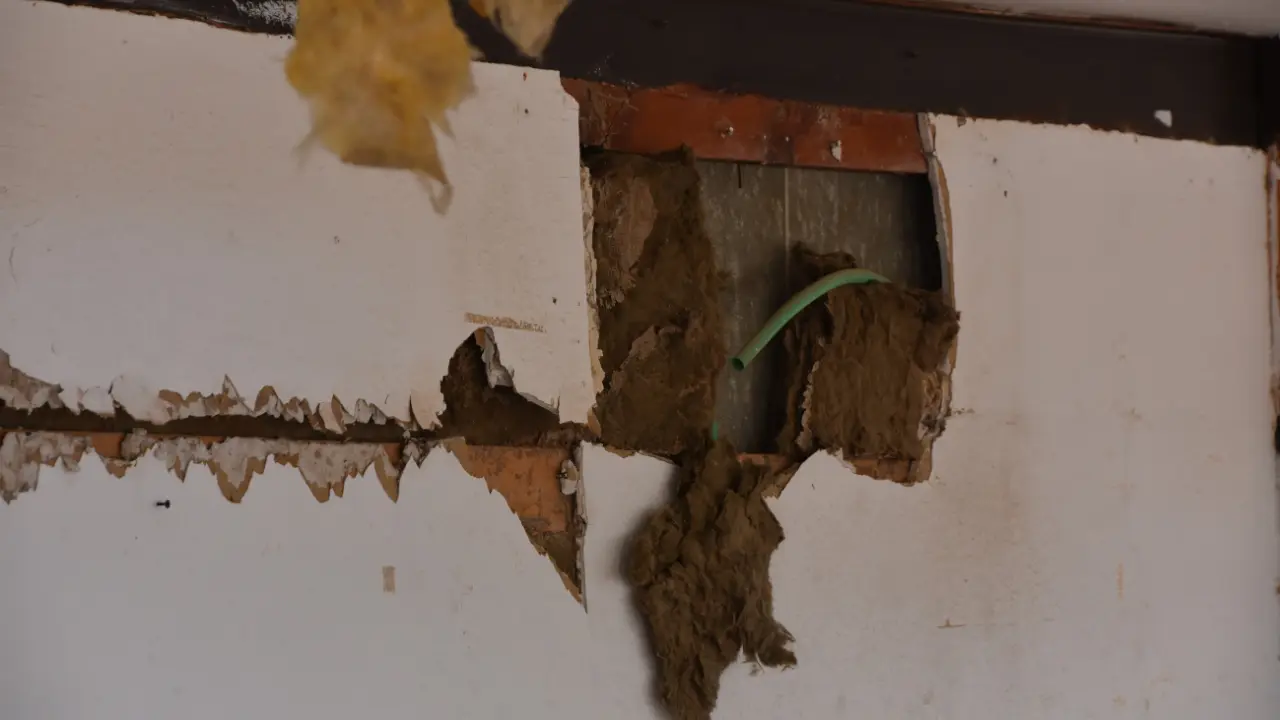
What a Water-Stained Ceiling Is Actually Telling You
Brown rings, bubbling paint, and sagging drywall
A brown or yellow ring means water passed through and evaporated, leaving minerals behind. A ring with a darker edge usually means it’s happened more than once.
Bubbling or peeling paint means moisture is still in the drywall. Sagging means the drywall has lost its structure and is holding weight it can’t hold. That’s the one to treat as urgent.
Why the stain is smaller than the damage
Water runs along framing before it drops. A stain over the hallway can come from a leak in the bathroom two rooms away.
The visible mark is where the water finally came through. The wet area above is nearly always wider, and it can include insulation, joists, and the top plate of the wall below.
When it is safe to wait and when it is not
Call right away if the drywall sags, if the stain grows while you watch it, if a light fixture in that area flickers, or if you smell something musty.
A small stain that’s been dry and unchanged for a long time is less urgent. Still worth an inspection, because dry on the surface doesn’t mean dry in the cavity.
Common Causes in Elk River Homes
Ice dams and roof leaks
This is the classic Minnesota one. Snow melts on a warm roof, refreezes at the cold eave, and backs water up under the shingles. From there it runs into the wall or the ceiling below.
Ice dams damage ceilings without ever damaging the roof in an obvious way. If that’s your situation, our ice dam removal service addresses the cause.
Upstairs bathroom and appliance leaks
A failed toilet seal, a cracked supply line, a shower pan that’s given up. Second-floor bathrooms sit directly above living space, so the ceiling below is the first thing to show it.
Second-floor laundry rooms cause the same problem. Washing machine supply hoses fail without warning.
Burst supply lines inside ceilings and walls
Plumbing that runs through an unheated attic or an exterior wall can freeze and split. When it thaws, the ceiling below takes it. Our burst pipe cleanup page covers that scenario in full.
Repair or Replace? How We Decide
Moisture readings, not guesswork
Every ceiling water damage repair starts with meter readings. We take them across the affected area and well past the visible stain. That tells us how far the water traveled.
Nobody should decide this by looking at it. We’ve seen stains the size of a dinner plate sitting under six feet of wet insulation.
Readings also settle the argument with an adjuster. A number on a meter is evidence. An opinion isn’t.
When a patch is enough
If the drywall is structurally sound, the cavity above is dry, and the source is fixed, a patch and repaint can be the right call. That’s a good outcome and we’ll tell you when you’re in it.
When the drywall has to come out
Sagging drywall comes out. So does drywall that stays wet after drying attempts, drywall with mold behind it, and anything soaked by sewage or contaminated water.
Wet insulation almost always comes out too. Once fiberglass is saturated, it stops insulating and starts holding moisture against the framing.
Our Ceiling Water Damage Repair Process
Find the source and stop it
We don’t touch the ceiling until we know where the water came from. Repairing a ceiling under an active leak is money thrown away.
If the source is a plumbing failure, you’ll need a licensed plumber for the pipe itself. We coordinate around that.
Dry the cavity above the ceiling
We open controlled access points and dry the space above the drywall. Insulation, joists, and subfloor all get monitored until readings come back dry.
This is the step most handyman repairs skip. Painting over a stain traps the moisture and buys you a mold problem instead of a solution.
Replace, texture, and paint to match
Here’s where being a general contractor matters. We don’t hand you off after drying.
We hang new drywall, match your existing texture, prime with a stain-blocking sealer, and paint. Knockdown, orange peel, smooth, popcorn. Matching texture is finish work, and we do finish work every day through our remodeling services.
Skipping the stain-blocking primer is the classic shortcut. The mark bleeds back through the new paint within a few weeks.
Why Homeowners in Elk River Call Us
We’ve been at this since 2003 from our shop at 12767 Meadowvale Rd NW in Elk River. We’re an IICRC Certified Firm, certified through the IICRC. We’re also BBB A+ rated and Lead-Safe certified, which matters in older homes.
Most ceiling water damage repair jobs here trace back to one of three sources. Ice dams in winter. A bathroom or laundry leak upstairs. A split supply line in a cold cavity. We’ve seen all three many times over.
Most restoration companies dry your house and leave. We handle mitigation and the rebuild as one company, with one project manager and one phone number.
We also give you a written scope before any work starts, so you know what’s coming out and what it costs. Our customer portal shows the schedule in real time. Have a look at our reviews to see how that works in practice.
Free inspections are available. If you’re not sure whether that stain is serious, that’s exactly what an inspection is for.
Ceiling Water Damage FAQs
Is a water stain on the ceiling dangerous?
It can be. Sagging drywall can fall, and trapped moisture can lead to mold in the cavity above. A stain near a light fixture or electrical box should be treated as urgent.
Can water-damaged drywall be dried instead of replaced?
Sometimes. If it’s structurally sound and dries fully on the meter, it can stay. Sagging, crumbling, or contaminated drywall comes out.
How much of the ceiling has to come out?
Only what the moisture readings show is wet, plus a margin. We map the wet area before cutting so removal follows the damage instead of the guess.
Will you match my existing ceiling texture and paint?
Yes. We match knockdown, orange peel, smooth, and popcorn textures, then prime and paint. Texture matching is finish work we do on remodels every week.
Does insurance cover ceiling damage from an ice dam?
Often, yes. Ice dam damage is frequently treated as sudden and accidental. Coverage varies by policy, and we document the loss for your adjuster either way.
Do you offer a free inspection for ceiling water damage?
Yes. Free inspections are available across Elk River and the Twin Cities metro. Call 763-633-2010 to schedule one.
Get It Looked At Before It Gets Bigger
A ceiling stain rarely improves on its own. What starts as a patch turns into a full replacement once the framing above stays wet.
Call our office at 763-633-2010 to schedule a free inspection. If the ceiling is actively leaking or sagging right now, call our 24/7 emergency line at 612-518-8852.
Kiser Construction. Building in Elk River since 2003, restoring water damage since 2008. IICRC certified, license BC416441.