
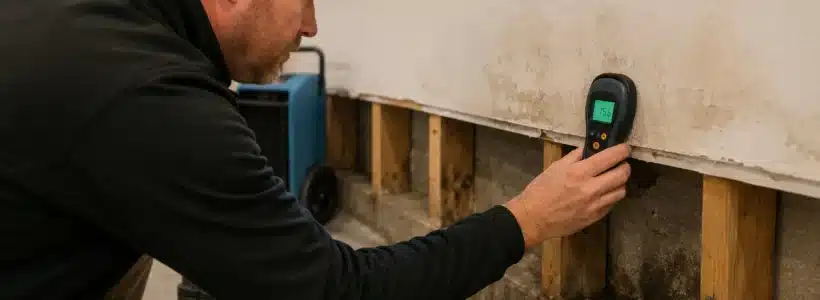
Moisture Detection in Elk River: Catching Hidden Water Before It Spreads
Trusted restoration & rebuild experts serving the Twin Cities since 2003
✓ In business since 2003 (23rd year in 2026)
⚡Fully bonded and licensed
📍IICRC Certified Firm (Institute of Inspection Cleaning and Restoration Certification)
What’s Covered on This Page
- Signs Your Home May Have Hidden Moisture
- Deciding If a Past Leak Needs a Professional Check
- When a Spill Doesn’t Need Professional Detection
- How Moisture Mapping and Equipment Find Hidden Water
- Confirming Areas Are Fully Dry Before Repairs Close Up
- How fast can you get out to check for hidden moisture in my home?
- What should I expect when you come to check for moisture?
- Why does Elk River have more hidden moisture problems than other areas?
- Do I need a professional moisture check after a small spill?
- What tools do you use to find water hiding inside walls or floors?
- Can hidden moisture turn into mold if I ignore it?
Need Moisture Detection?
24/7 Emergency Response. Call Kiser Construction now.
Signs Your Home May Have Hidden Moisture
Quick Summary:
Moisture Detection finds water hiding inside walls, floors, and ceilings before it turns into mold, rot, or a bigger repair bill. Elk River homes deal with spring thaw and basement moisture more than most, so catching damp spots early matters. If you notice a musty smell, a soft spot, or a stain that keeps coming back, that’s usually hidden moisture talking.
Moisture Detection is how we find water damage you can’t see with your own eyes. Here’s the thing we tell every homeowner: the water you can see is rarely the whole problem. It’s the water behind the drywall, under the subfloor, or soaked into insulation that turns a small leak into a mold problem or a rotted joist. That’s the whole argument behind this page. Catching hidden moisture early is cheaper, faster, and a lot less stressful than waiting until it shows itself. Elk River sees enough freeze-thaw cycles and spring melt that basements and lower levels are especially at risk, and a lot of homeowners don’t notice a problem until it’s already spread.
So what does hidden moisture look like before it becomes obvious? Sometimes it doesn’t look like anything at all. It smells musty in one room but not the others. A ceiling tile looks a shade darker than the rest. The baseboard near the bathroom feels soft when you press on it. We see this every single week – someone calls about a small stain, and we find the drywall behind it is already soaked through.
- A musty or damp smell that comes and goes, especially in basements or crawl spaces
- Paint or wallpaper that’s bubbling, peeling, or discolored in one spot
- Warped or soft flooring near a bathroom, kitchen, or exterior wall
- Ceiling stains that reappear after painting over them
- Windows or windowsills that stay damp even on dry days
Nine times out of ten, it’s one of these five things. And if you’re standing in your kitchen right now looking at a ceiling spot you’ve painted over twice, that’s not a coincidence – that’s moisture doing what moisture does.
Deciding If a Past Leak Needs a Professional Check
Not every past leak needs a professional check. If the spill was small, you caught it fast, and everything looked dry within a day, you probably don’t need us.
A little water on a hard floor that got mopped up right away rarely turns into anything. Same with a small spill you dried with fans that same afternoon. Quick, shallow water that never soaked into drywall or subfloor is fine on its own.
Here’s where it gets trickier. If the water sat for more than 24 to 48 hours, soaked into carpet, ran along baseboards, or dripped from a ceiling, surface-dry doesn’t mean structure-dry. Elk River has a lot of homes built before the 1990s with basement slab foundations, and those slabs hold moisture longer than people expect during our spring thaw. What looks fine on top can still be wet three inches down.
So how do you tell? Look for a musty smell that comes and goes with humidity. Check if paint near the old spot is bubbling or if drywall feels soft when you press it. Any warping in trim or flooring near the original leak site is a signal too.
Honestly, if none of that’s happening and it’s been weeks with no smell, no staining, no soft spots, you’re probably in the clear.
But if you’re not sure, that uncertainty is exactly the reason moisture meters exist. A quick reading takes minutes and tells you what your nose and eyes can’t.
When a Spill Doesn’t Need Professional Detection
Not every wet spot needs a moisture meter. Spilled a glass of water on the kitchen floor and wiped it up in two minutes? You’re fine. Dried it, moved on, no call needed.
Here’s the real test we use. If the water touched a hard surface, sat for under an hour, and you can see and reach every part of it, you probably don’t need us. Tile, sealed hardwood, laminate – wipe it, fan it, forget it.
- A spilled drink or pet accident cleaned up right away on hard flooring
- Condensation on a window in winter, gone once you wipe the sill
- A short splash near the sink that never reached the cabinet base
- Rain that blew in through a screen door for a few minutes during a storm
Here’s where it changes. Any water that touched drywall, carpet pad, or sat for more than a couple hours is a different animal. Moisture wicks up drywall fast, and you often can’t see how far. Same with anything near a toilet overflow or appliance leak – those situations move quickly from small spill to hidden problem.
So ask yourself two things. Did it soak into something soft or porous? And did more than an hour pass before you noticed it? If either answer is yes, that’s worth a real look. If both answers are no, save your money and mop it up yourself. We’d rather tell you the truth than run a meter over a floor that’s already dry.
Have questions? We’re happy to help.
24/7 Emergency Response. Kiser Construction is ready to help.
How Moisture Mapping and Equipment Find Hidden Water
Walking into a room and looking around doesn’t tell you much. Water travels sideways through framing, drops down inside walls, and pools under flooring where nobody can see it. We use tools that read what our eyes can’t.
Water hides. That’s really the short version of it.
A moisture meter gives us a number, not a guess. Thermal imaging shows temperature differences that point to wet insulation or a slow leak behind drywall. Here’s what usually goes into a proper check:
- Pin or pinless moisture meters on walls, baseboards, and subfloor
- Infrared thermal cameras to spot temperature shifts from trapped water
- Hygrometers to measure humidity in the air, not just the surface
- Borescopes when we need to see inside a wall cavity without cutting it open
We map every reading room by room. That map becomes part of the record, so if drywall or flooring needs to come out later, there’s documentation showing why. Elk River has a lot of homes with finished basements built on slab, and those slabs hold moisture longer after a leak than a home with a crawl space does. Skipping the mapping step there almost always means missing something.
Nine times out of ten, the wet spot on the ceiling isn’t the whole story.
Confirming Areas Are Fully Dry Before Repairs Close Up
Here’s where a lot of jobs go wrong for other companies. Drywall goes back up too soon, paint gets rolled on, and everyone moves on. Then six months later there’s a musty smell and a soft spot in the wall. We don’t close anything up on a guess.
Before we sign off on drying, we take moisture readings again. Not once – every visit, until the numbers match what’s normal for that material in that room.
- Moisture meter readings on studs, subfloor, and drywall compared to unaffected areas in the same home
- Relative humidity checks in the room versus the rest of the house
- A second look inside wall cavities where a pinless meter can’t see through insulation
- Documented readings kept on file for your insurance claim
We’re an IICRC certified firm, and that training is exactly what these final checks come from. It’s not a feeling, it’s a standard.
If a reading comes back high, we run equipment longer. Simple as that. We’d rather add a day than have you dealing with mold behind a wall we already patched. And since we handle the drying and the rebuild, there’s no other contractor to blame if something gets missed – it’s on us the whole way through.
Once everything checks out dry, we give you the readings in writing before any repair work starts.
Frequently Asked Questions
Common questions about Moisture Detection
How fast can you get out to check for hidden moisture in my home?
We schedule most moisture checks within a day or two of your call, sooner during spring thaw when calls pick up. Elk River sees a rush of basement moisture issues once the snow starts melting, so we keep extra slots open that time of year. If you’re already seeing a musty smell or a soft spot on a wall, don’t wait it out. The faster we get a moisture meter on the problem, the less chance it has to spread into the subfloor or framing.
What should I expect when you come to check for moisture?
We start by walking the area with you and asking where the smell or stain first showed up. Then we use moisture meters, thermal imaging, and sometimes a borescope to read what’s happening inside walls and under flooring without tearing anything open. We map every reading room by room as we go. By the end, you’ll know exactly which spots are wet, how deep it goes, and whether it’s something to watch or something to fix now.
Why does Elk River have more hidden moisture problems than other areas?
Elk River’s freeze-thaw cycles and spring melt push extra water toward basements and lower levels more than most areas see. A lot of local homes were built before the 1990s with basement slab foundations, and those slabs hold moisture longer than people expect once the ground starts thawing. What looks dry on top can still be wet a few inches down for weeks. That’s why we tell homeowners here to check basements and crawl spaces closer to spring than any other season.
Do I need a professional moisture check after a small spill?
Not always. If the water touched a hard surface, sat for under an hour, and you wiped it up completely, you’re probably fine on your own. But if it soaked into carpet, drywall, or baseboards, or if more than an hour passed before you noticed it, that’s worth a real check. Moisture wicks up drywall fast and hides where you can’t see it. When in doubt, a quick meter reading takes minutes and settles the question for good.
What tools do you use to find water hiding inside walls or floors?
We rely on moisture meters, infrared thermal cameras, hygrometers, and borescopes depending on where we suspect the water is hiding. Moisture meters give us an exact reading instead of a guess, while thermal imaging shows temperature shifts that point to wet insulation behind drywall. A borescope lets us look inside a wall cavity without cutting into it. Using more than one tool means we’re not relying on a single reading to make a call about your home.
Can hidden moisture turn into mold if I ignore it?
Yes, and that’s exactly why catching it early matters so much. Water trapped behind drywall or under flooring creates the damp, dark conditions mold needs to start growing, often within a couple of days. A ceiling stain that keeps coming back after painting is usually a sign the moisture is still there, feeding the problem underneath. Getting a moisture check as soon as you notice a recurring stain or musty smell is the best way to catch it before mold becomes part of the story.
Ready to Get Started?
24/7 Emergency Response. Call (763) 633-2010 today.
📅 24/7 Emergency Response